5916Views 0Comments
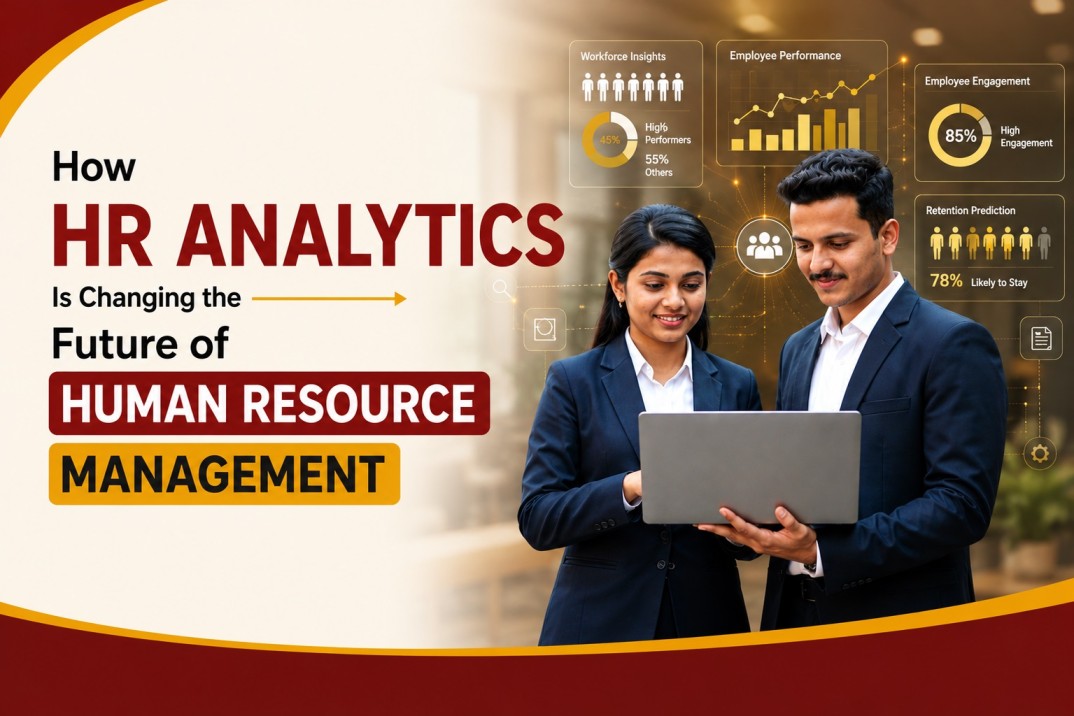
How HR Analytics Is Changing the Future of Human Resource Management
Key Takeaways
- HR analytics supports HR decisions through data and evidence.
- It improves hiring, retention, employee performance, and workforce planning.
- Employee data shows skill gaps and exit risks at an early stage.
- Predictive analytics supports future hiring and succession planning.
- HR professionals need people skills and data skills.
- Data guides HR decisions, but human judgment still matters.
HR analytics in HRM uses employee data for better hiring, performance, retention, workforce planning, and talent management. HR teams study attendance, hiring results, reviews, surveys, training records, and exit trends.
Traditional HR depends on experience and reports. HR analytics adds facts to people’s decisions. It gives HR teams a clearer view of workforce needs and employee concerns.
HR teams now link people’s practices with business goals. They also notice skill gaps, engagement issues, and turnover risks earlier. The result is a more informed HR function. Data gives direction, and human judgment adds context.
Introduction
HR has moved beyond files, payroll, and routine reports. These tasks still matter, but HR now has a larger role in business planning.
Organizations use HR data analytics to study hiring quality, employee performance, workforce planning, and talent growth. HR analytics in HRM helps teams read patterns and take clearer decisions.
HR teams work closer to business leaders today. Workforce data supports this shift. It gives leaders a better view of hiring needs, retention issues, and employee performance.
SHRM reports that 82% of organizations using people analytics apply it mainly to retention and turnover. This shows the strong link between HR analytics, employee retention, and workforce planning.
What is HR Analytics?
Meaning of HR Analytics
HR analytics is the process of collecting and studying employee data. HR teams use this data while making people decisions.
This data includes attendance, hiring results, performance scores, engagement feedback, training records, and exit trends. Each record tells something about the workforce.
HR analytics does not remove human judgment. It gives HR teams better information before they decide.
Difference Between HR Analytics and Traditional HR
| Basis | Traditional HR | HR Analytics in Human Resource Management |
| Decision-making | Depends on experience, manual reports, and personal judgment | Uses data, patterns, and measurable signs |
| Data use | Uses basic employee records and reports | Studies hiring, performance, engagement, retention, and workforce data |
| Accuracy | Decisions often depend on assumptions | Decisions have support from evidence |
| Role of HR | Focuses more on routine HR tasks | Supports strategic people decisions |
| Human judgment | Relies heavily on human understanding | Uses data and human understanding together |
| Outcome | Gives HR teams a basic view of people issues | Gives HR teams a stronger base for decisions |
Importance of HR Analytics in Human Resource Management
i) Helps HR Make Data-Driven Decisions
The importance of HR analytics lies in evidence. HR teams study hiring sources, attrition, training impact, and performance gaps.
This data shows what works. It also shows what needs review. HR decisions become more practical when facts support them.
ii) Improves Employee Experience
People analytics in HR gives teams a better view of employee needs. Survey data and feedback records often show stress, low morale, or weak manager support.
HR teams use these signals to improve workplace culture. Better employee experience also supports retention.
iii) Supports Business Growth
HR analytics in HRM connects people’s decisions with business goals. It helps reduce hiring waste and improve productivity.
Strong teams support business growth. Workforce data helps leaders understand where support is needed.
Key Human Resource Analytics Concepts
Descriptive, Diagnostic, Predictive, and Prescriptive Analytics
Human resource analytics concepts are simple.
- Descriptive analytics shows what happened.
- Diagnostic analytics explains why it happened.
- Predictive analytics in HR estimates future outcomes.
- Prescriptive analytics suggests the next action.
These four types help HR teams study turnover, absenteeism, hiring cost, attrition reasons, exit risk, and staffing changes.
How HR Analytics Helps Human Resource Management
1) Better Recruitment and Hiring
HR analytics starts with hiring. Recruitment data shows which sources bring suitable candidates.
Job portals, referrals, interviews, and candidate sources produce different results. HR teams compare these results and improve the quality of hire.
This also reduces delays. Recruitment teams spend more time on sources that bring better candidates.
2) Improved Employee Performance Management
HR analytics for employee performance helps managers track goals, output, and progress. Reviews become more balanced when records support them.
Performance data reduces guesswork. Managers get a clearer view of employee contribution.
3) Stronger Employee Retention
Human resource analytics shows patterns behind employee exits. Some employees leave because growth feels limited. Others leave due to weak feedback, pay gaps, or poor manager support.
Exit data gives HR teams early signals. They address issues before turnover becomes harder to manage.
4) Smarter Learning and Development
Training plans work better when they follow real skill gaps. HR data shows where employees need support.
Learning teams use this information while planning programs. They also review training results and check whether work quality improves.
Role of HR Data Analytics in Modern HRM
a) Turning Employee Data Into Useful Insights
The role of HR analytics in HRM is to turn raw records into insight. Attendance records, reviews, surveys, hiring data, and training data hold useful signals.
These records need proper study. HR teams read the patterns and connect them with people’s decisions.
b) Improving HR Strategy With Data
HR data helps leaders plan hiring, training, engagement, and retention. It moves HR from routine work to a more strategic role.
HR prospects of Vivekanand Business School lists People Analytics, Organizational Development and Change, Competency Mapping, and Performance Management as part of its PGDM-HR curriculum.
HR Analytics for Workforce Planning
i) Understanding Current Workforce Strength
HR analytics for workforce planning helps companies review team size, skill levels, productivity, and role gaps.
This gives leaders a clear view of the current workforce. It also shows whether employees are placed in suitable roles.
ii) Planning Future Talent Requirements
Companies use workforce data while planning future hiring. Growth, seasonal demand, and skill shortages affect staffing needs.
Workforce planning helps reduce overstaffing and understaffing. It also supports better use of hiring budgets.
iii) Managing Skill Gaps
Skill data shows whether teams need training, reskilling, or new hiring. HR teams use this information while planning workforce support.
This keeps teams closer to business needs. It also helps employees grow in the right direction.
HR Analytics for Employee Performance
a) Measuring Productivity More Clearly
HR teams track goals, output, and contribution. This creates a more transparent performance system.
Performance data gives managers a clearer view. It also gives employees better feedback on their work.
b) Identifying Training Needs
Performance records show where employees face difficulty. HR teams use these records while planning training.
Specific training often works better than general programs. Employees get support in areas that need attention.
c) Supporting Fair Performance Reviews
Data-backed reviews use goals, output, and progress. This reduces bias in feedback.
Managers still need judgment. Data gives structure, and managers add context.
HR Analytics for Talent Management
1) Finding and Developing Top Talent
HR analytics for talent management helps identify employees with strong performance and growth signs.
HR teams use this information while planning learning paths and career growth. This also supports long-term talent planning.
2) Improving Internal Mobility
Employee data helps match people with internal roles. This supports career growth and improves retention.
Internal mobility also saves hiring time. Employees get more opportunities inside the organization.
3) Building Future Leaders
Talent data supports succession planning. Companies identify employees who show leadership signs.
These employees receive training and mentoring. This prepares them for larger roles in the future.
Also Read: How PGDM Students Stay Relevant in an AI-Driven Job Market
How HR Analytics Is Changing the Future of Human Resource Management
HR is Becoming More Strategic
HR analytics is changing HR work. Daily decisions now rely more on data and less on guesswork.
HR is not limited to recruitment, payroll, and employee files. HR professionals now take part in business planning.
Workforce data helps them speak the language of business. It connects people decisions with performance, cost, and growth.
Decisions Are Becoming More Data-Driven
HR leaders use insights to improve hiring, retention, engagement, and productivity. Data also helps HR explain decisions to senior leaders.
This builds trust in HR decisions. Leaders understand why a step is needed and what problem it addresses.
Employee Experience is Becoming More Personal
Employee needs differ across teams and roles. Data helps HR understand these differences.
Learning plans, wellness support, and engagement activities become more relevant when they follow employee feedback and workforce trends.
Technology is Reshaping HR Roles
AI, automation, HR software, and dashboards are changing HR work. Routine tasks take less time.
HR professionals now need people skills and data skills. They need to read reports, explain insights, and still understand employee concerns.
Also Read : How PGDM Students Can Stay Relevant in an AI-Driven Job Market
Benefits of HR Analytics for Organizations
The benefits of HR analytics include:
- Better hiring decisions
- Lower employee turnover
- Higher employee productivity
- Better workforce planning
These benefits depend on proper data use. Clean records, clear goals, and responsible analysis matter.
Skills Required for HR Professionals in the Age of Analytics
HR professionals need basic data interpretation skills. They also need HRMS knowledge, dashboard awareness, strategic thinking, and clear communication.
These skills help HR teams explain insights to managers and leaders. They also help HR connect employee needs with business goals.
People skills remain important. HR deals with people, and data only supports that work.
Challenges of Using HR Analytics
Employee data needs careful handling. HR teams need privacy rules, clean records, and proper training.
Poor data creates poor decisions. HR teams need reliable records and clear processes.
Data should support decisions, but it should not replace empathy. Ethics and context remain important in every HR decision.
Future Scope of HR Analytics in HRM
AI supports resume screening, employee sentiment study, and workforce predictions. More companies need people analysts and workforce planning experts.
The future of human resource management needs HR professionals who understand people and data. This mix will shape hiring, learning, retention, and leadership planning.
Conclusion
HR analytics is changing how HR teams hire, retain, train, and plan talent. It gives HR professionals evidence for people’s decisions.
Data shows patterns, but people still need context. A good HR decision needs both.
Students who want future-ready HR careers should build strong knowledge of HR analytics, people management, and strategic HRM.
Vivekanand Business School’s PGDM in human resource management includes People Analytics, SHRM-linked learning, practical HR exposure, and a 15-month classroom plus 9-month internship structure. This supports data-led HR learning.
About the Author:
Ms. Hetaal Palan is a result oriented Senior Educational Marketing Professional with over 15 years of rich experience in managing Business Development, Sales & Marketing, Brand Promotion / Launch, Key Account Management & Team Management specialist in the higher education sector. Presently associated with Vivekanand Business School (VBS), Mumbai, as Assistant Director – Branding, Marketing & Student Relations. Follow her on Linkedin.
Frequently Asked Questions
HR analytics in HRM is the use of employee data to improve hiring, retention, performance, workforce planning, and talent management. It studies attendance, recruitment, training, reviews, engagement surveys, and exit trends.
HR analytics gives HR teams evidence before they make decisions. It improves hiring quality, employee experience, retention, training, and workforce planning.
HR analytics studies exit patterns and engagement data. It shows issues such as limited growth, weak feedback, pay gaps, poor manager support, and low engagement.
HR analytics is making HR more strategic and data-focused. HR professionals use data for hiring, performance, engagement, succession planning, and workforce decisions.
A career in HR analytics needs HR knowledge, data interpretation, dashboard awareness, HRMS understanding, communication, and strategic thinking.