5933Views 0Comments
Why Emotional Intelligence Is Becoming a Core Skill in PGDM in Human Resource Management
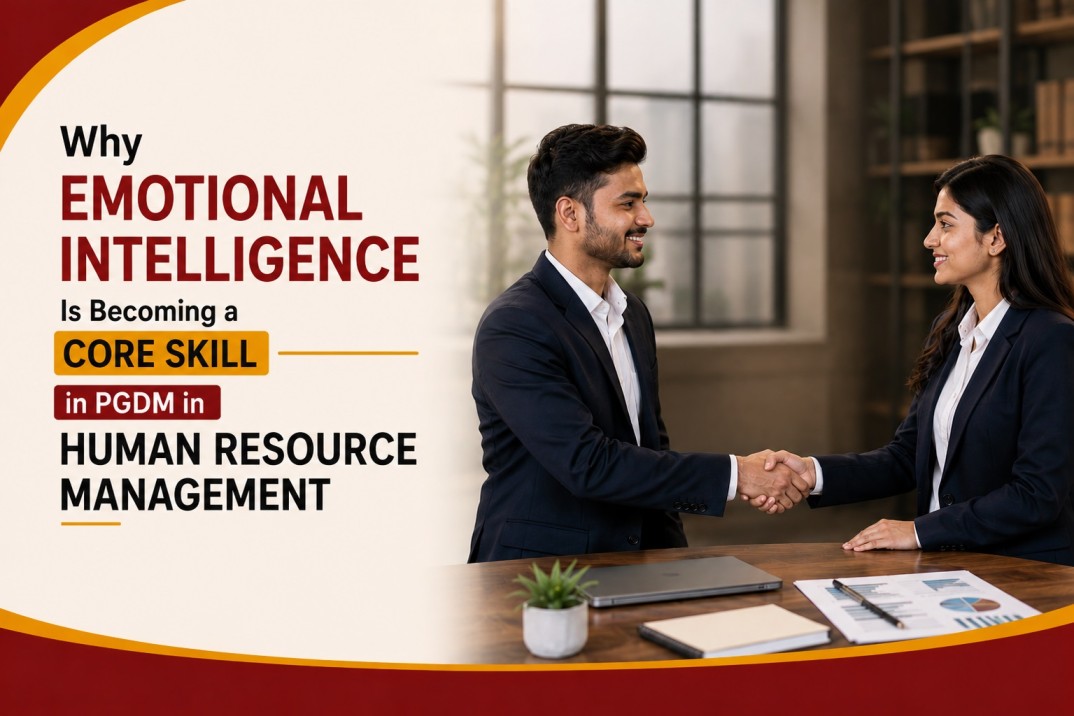
Emotional intelligence in HR has become central to recruitment, employee relations and team leadership. HR professionals manage conversations that affect trust, performance and workplace culture. Technical knowledge supports policies and systems. Emotional awareness helps you understand employee sentiment and respond with fairness.
A Post Graduate Diploma in Management or PGDM gives you structured HR knowledge and practical exposure. A specialised HR programme also develops the judgement needed for conflict resolution, feedback and workforce development.
Key Takeaways
- HR roles now require technical knowledge and strong interpersonal awareness.
- Emotional quotient or EQ includes self-awareness, empathy, self-control and relationship management.
- Vivekanand Business School follows 15 months of academics and a 9-month paid industry internship. This structure links classroom learning with workplace practice.
What Is Emotional Intelligence?
Emotional intelligence is the ability to identify, understand and manage emotions. It also involves recognising emotional signals in other people. The concept is often called emotional quotient or EQ.
EQ includes four practical abilities:
- Self-awareness
- Self-management
- Social awareness
- Relationship management
These abilities support clear communication and balanced decisions. They also help you understand how your tone and behaviour affect other people.
Why Do HR Professionals Need High EQ?
HR roles have changed because HR managers now support workforce planning, employee relations and strategic decisions. The U.S. Bureau of Labor Statistics also identifies communication, decision-making, interpersonal and leadership skills as important qualities for HR managers. It projects 5% employment growth for HR managers from 2024 to 2034.
HR professionals handle sensitive situations each day. These include poor performance, workplace conflict, restructuring and employee wellbeing. High EQ helps you listen closely and separate facts from emotional reactions.
Technical Skills vs Emotional Intelligence
| Technical HR skills | Emotional intelligence skills |
| Payroll and compensation | Empathy and active listening |
| Labour law knowledge | Conflict management |
| HR analytics | Emotional self-control |
| Recruitment systems | Candidate awareness |
| Performance processes | Constructive feedback |
Both skill groups support effective HR practice. Technical expertise guides the process and EQ improves the human experience.
How Does EQ Affect Daily HR Tasks?
Emotional intelligence in human resource management shapes the way you recruit, counsel and support employees.
A recruiter with interpersonal awareness notices hesitation during an interview and asks a clearer follow-up question. An employee relations manager remains calm during a complaint and gives each person space to explain the issue. A learning manager reads the mood of a group and adjusts the session when attention falls.
These actions improve communication and reduce avoidable misunderstandings.
Use-Case Example: Workplace Conflict
Before applying EQ: Two employees disagree about missed deadlines. The HR manager focuses only on policy and issues a warning. The issue remains unresolved because both employees feel ignored.
After applying EQ: The HR manager listens to both employees and identifies unclear responsibilities as the main issue. The manager defines ownership and sets a review date. The discussion ends with clear expectations.
This example shows how emotional intelligence helps resolve workplace conflicts more effectively.
What Are Five Ways to Practise EQ at Work?
Quick Guide
- Pause before replying during a difficult conversation.
- Ask one clear question before making an assumption.
- Observe changes in tone and body language.
- Record emotional triggers after challenging meetings.
- Give feedback about behaviour and not personality.
Regular practice strengthens emotional intelligence in the workplace. It also prepares you for interviews, internships and early management roles.
Which Human Resource Management Skills Matter Today?
Modern HR combines business understanding and workforce development. Important human resource management skills include:
- Recruitment and talent assessment
- Employee engagement
- Performance management
- HR analytics
- Labour law awareness
- Communication and negotiation
Digital transformation and hybrid work have also changed employee expectations. HR teams now manage virtual onboarding, remote collaboration and digital performance systems. These shifts have placed adaptability and emotional literacy among important future HR skills.
How Does a PGDM Develop Emotional Intelligence?
A PGDM in HR provides more than theoretical knowledge. Case studies expose you to workplace dilemmas. Group projects teach you how to work across different personalities. Presentations improve confidence and communication.Internships expose you to real workplace situations where your actions affect others.
A well-designed programme also helps you study organisational behaviour, recruitment, employee engagement and performance management. These subjects prepare you to make fair and informed HR decisions.
What Does the VBS HR Programme Include?
Vivekanand Business School offers an All India Council for Technical Education or AICTE-approved PGDM programme. It is also accredited by the National Board of Accreditation or NBA and recognised by the Association of Indian Universities or AIU. AIU recognition gives the PGDM Master’s equivalence for further academic study.
The PGDM in Human Resource Management includes participative learning, assignments and practical activities. Students also receive payroll training as an added certification component.
The VBS model includes 15 months of trimester-based academics and a 9-month paid industry internship. The extended internship gives students time to observe workplace behaviour and practise communication in professional settings.
Which Career Paths Follow Advanced HR Training?
Graduates often explore roles such as:
- Talent acquisition specialist
- HR business partner
- Learning and development executive
- Employee relations specialist
- Compensation and benefits analyst
- HR operations executive
Each role requires business knowledge and interpersonal awareness. Your long-term progress depends on how well you combine both.
Conclusion
Emotional intelligence in HR supports better listening, fairer decisions and stronger workplace relationships. EQ does not replace technical expertise. It helps you apply that expertise with judgement and clarity.
Advanced HR management training at Vivekanand Business School combines academic study with an extended paid internship and practical learning. This structure aligns student skills with current workplace demands. You gain the framework needed to manage people issues and contribute to responsible workforce development.
Explore the HR specialisation at Vivekanand Business School and assess how its curriculum fits your career plans.
About the Author:
Ms. Hetaal Palan is a result oriented Senior Educational Marketing Professional with over 15 years of rich experience in managing Business Development, Sales & Marketing, Brand Promotion / Launch, Key Account Management & Team Management specialist in the higher education sector. Presently associated with Vivekanand Business School (VBS), Mumbai, as Assistant Director – Branding, Marketing & Student Relations. Follow her on Linkedin.
Frequently Asked Questions
Emotional intelligence is important in HR because it supports better listening, fair decisions and stronger workplace relationships. It helps HR professionals manage conflict, give feedback and understand employee concerns. EQ also improves the way technical HR policies are applied in real workplace situations.
The main emotional intelligence skills for HR professionals are self-awareness, self-management, social awareness and relationship management. These skills help HR teams stay calm, understand different viewpoints and communicate clearly during sensitive workplace conversations.
Emotional intelligence helps in workplace conflict by allowing HR professionals to listen to each side, identify the real issue and respond without emotional bias. It keeps the discussion focused on facts, responsibilities and practical solutions.
A PGDM in Human Resource Management develops emotional intelligence through case studies, group projects, presentations and internships. These activities expose students to different personalities, workplace challenges and team situations. They also improve communication, judgement and conflict-resolution skills.
Career options after a PGDM in Human Resource Management include talent acquisition specialist, HR business partner, learning and development executive, employee relations specialist, compensation analyst and HR operations executive. The suitable role depends on the student’s interests, skills and internship experience.