6190Views 0Comments
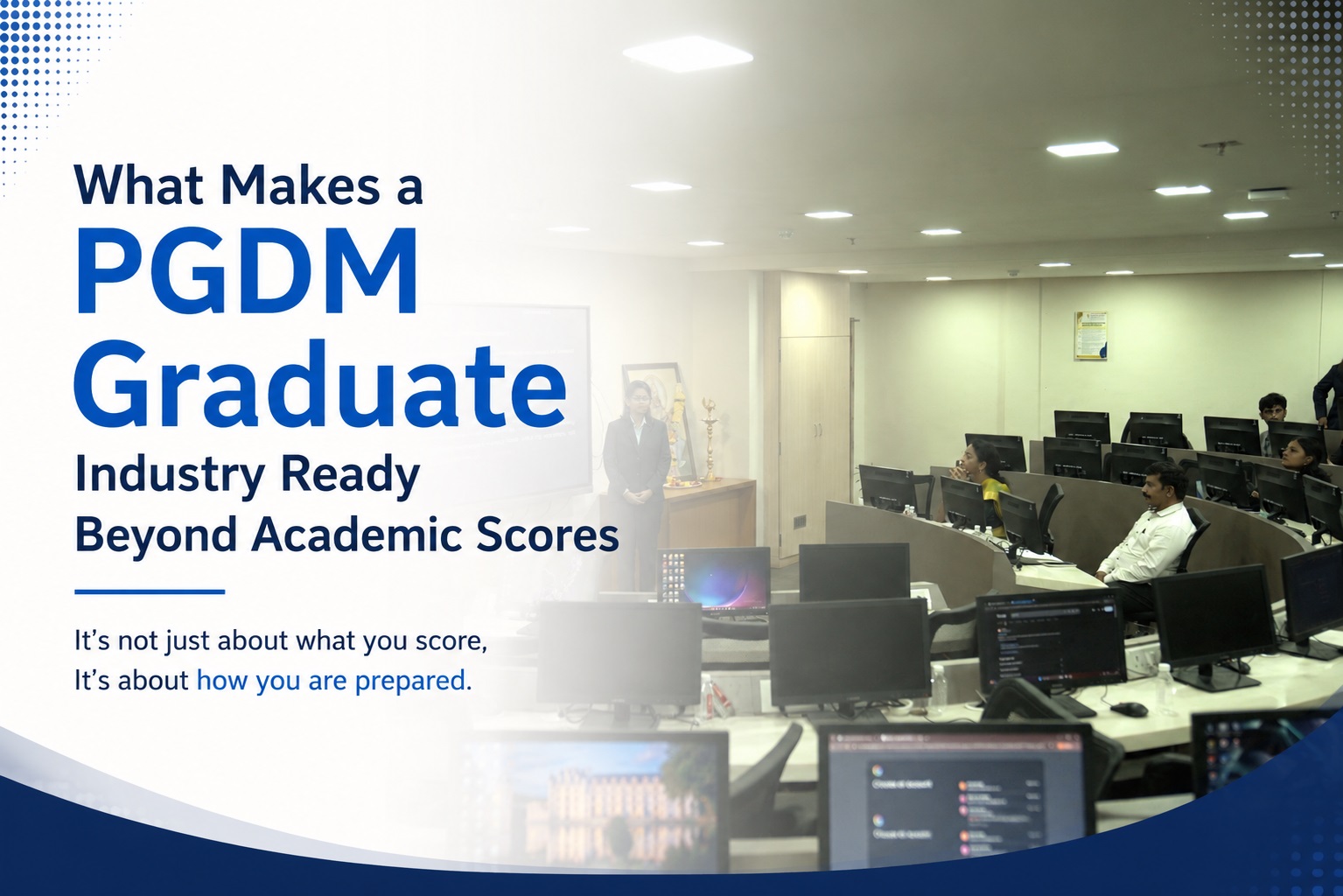
What Makes a PGDM Graduate Industry Ready Beyond Academic Scores
Key Takeaways
- Academic scores matter, but practical skills for PGDM students shape real industry readiness.
- Strong PGDM skills include communication, leadership, teamwork, critical thinking, and decision-making.
- An internship for PGDM students gives real workplace exposure and improves placement confidence.
- Industry certifications and PGDM professional development courses help students build domain-specific expertise.
- Experiential learning, live projects, and corporate interactions make PGDM students more job-ready.
- Mumbai gives PGDM students strong exposure to India’s business, finance, and corporate ecosystem.
- Vivekanand Business School’s 15-month academic model plus 9-month paid internship supports stronger industry readiness.
- The right PGDM institute helps improve PGDM employability in India and long-term career growth.
Recruiters today want more than just good scores. They are trying to understand something deeper. Can this student handle real business problems? Can they communicate clearly? Can they adjust when things change quickly? Because of this shift, building practical skills for PGDM students has become just as important as scoring well in exams.
Every year, India produces thousands of management graduates. But when companies hire, they often feel a gap. Many students still depend heavily on theory and haven’t had enough real exposure. What recruiters actually want is simple. People who understand how business works in practice, not just in books.
That’s exactly why management education has started changing. PGDM programs today are not just about lectures and exams. They now include internships, live projects, certifications, and hands-on learning.
A future-focused PGDM program tries to bring both worlds together. You learn concepts in class, but you also see how they apply in real companies. Institutes such as Vivekanand Business School have moved strongly in this direction with industry-integrated learning models, certifications, and long-duration internships.
Why Academic Scores Alone Don’t Define Success
Strong grades do reflect discipline and consistency. It shows you understand your subjects. But in real business situations, things are rarely textbook-like.
Recruiters now look for a mix of qualities like:
- Communication ability
- Leadership mindset
- Problem-solving skills
- Team collaboration
- Adaptability
- Decision-making confidence
This is where strong PGDM skills really matter in shaping a career.
Students who take part in live projects, case studies, simulations, and presentations usually feel more confident during placements. They are not just learning concepts. They are seeing how decisions are made in real situations
Soft Skills Shape How You Grow Professionally
Technical knowledge helps you get started. But soft skills often decide how far you go in your career. Strong soft skills for PGDM students make everyday work easier and more effective.
Communication and Presentation Skills
In almost every job role, communication is constant. You are talking to teams, clients, or managers. If you can explain your ideas clearly, half the battle is already won.
Students build this naturally through:
- Group discussions
- Presentations
- Industry interactions
- Classroom debates
- Case discussions
Over time, this builds confidence for interviews and workplace conversations.
Leadership and Teamwork
Not every student starts as a leader, but most learn it over time. Especially when they are put in group work or real responsibilities.
Leadership often develops through:
- Student committees
- Competitions
- Internship tasks
- Group assignments
These experiences slowly shape professional maturity.
Critical Thinking and Decision-Making
Business is full of uncertain situations. There is rarely one fixed answer. That’s why recruiters value students who can think clearly and decide logically.
This improves a lot through experiential learning and real project exposure.
Internships Create Real Industry Readiness
An internship for PGDM students is usually the first real taste of corporate life. It connects classroom learning with actual work expectations.
During internships, students experience:
- Office culture
- Day-to-day operations
- Client interactions
- Team coordination
- Real decision-making
Long internships are especially valuable because they give time to settle into real responsibilities instead of just observing.
At Vivekanand Business School, the structure is quite unique. Students go through 15 months of academic learning followed by a 9-month paid internship. This helps them gradually move from theory to practice without a sudden jump.
By the time students graduate, they already have strong industry exposure, which naturally improves placement readiness.
Professional Certifications Improve Employability
Today, a degree alone is often not enough. Recruiters like to see additional skills that match industry needs.
That’s why PGDM professional development courses now include certifications such as:
- Digital Marketing
- Generative AI
- Lean Six Sigma
- NISM
- IIBF
- Payroll Training
- Data Visualization
These certifications don’t just look good on a resume. They actually help students understand tools and processes used in real companies.
Experiential Learning Makes Learning Real
Students usually understand things better when they actually apply them. That’s where experiential learning makes a big difference.
Some key activities include:
- Live business projects
- Field visits
- Corporate workshops
- Consulting assignments
- Research competitions
The idea is simple. Instead of just studying business, students start experiencing it.
At Vivekanand Business School, the Micro-Credit System also encourages students to take part in extra activities like leadership programs, research work, and corporate exposure. Over time, this builds confidence and practical thinking.
Also Read : How AICTE, NBA, and AIU Accreditations Impact Your PGDM Program
Industry Exposure Changes Everything
Talking to industry professionals changes how students see their careers. It gives clarity that classroom learning alone can’t always provide.
Good PGDM institutes offer exposure through:
- Guest lectures
- CXO sessions
- Mentorship programs
- Industry workshops
- International immersion
Mumbai, in particular, adds a strong advantage. Being a corporate hub, students get exposure to BFSI, consulting, marketing, analytics, and logistics sectors. This directly improves PGDM employability in India.
Choosing the Right PGDM Institute Matters
Many students feel confused while choosing a PGDM program. The truth is, the institute matters just as much as the specialization.
The best institute for PGDM usually provides:
- Updated curriculum linked to industry
- Placement training and support
- Corporate tie-ups
- Real experiential learning
- Certifications
- Global exposure opportunities
Vivekanand Business School also holds AICTE approval, NBA accreditation, and AIU recognition, which gives its PGDM program strong academic credibility and Master’s equivalence.
Along with this, students also get international immersion opportunities and scholarship support, which adds more value to their overall learning journey.
Conclusion
Marks and academic scores will always matter, but they are no longer enough on their own. What truly shapes a career today is practical exposure, communication skills, internships, certifications, and leadership development. That’s what builds strong skills for PGDM students.
Modern PGDM courses in Mumbai are designed with this reality in mind. They don’t just focus on exams. They focus on making students workplace-ready.
If you are looking for a program that goes beyond classroom learning, the industry-integrated PGDM programs at Vivekanand Business School offer a strong mix of academics, exposure, and real-world experience that helps shape long-term career growth.
About the Author :
Ms. Hetaal Palan is a result oriented Senior Educational Marketing Professional with over 15 years of rich experience in managing Business Development, Sales & Marketing, Brand Promotion / Launch, Key Account Management & Team Management specialist in the higher education sector. Presently associated with Vivekanand Business School (VBS), Mumbai, as Assistant Director – Branding, Marketing & Student Relations. Follow her on Linkedin.
Frequently Asked Questions
A PGDM graduate becomes industry ready through practical skills, internships, live projects, certifications, and corporate exposure. Academic scores help, but recruiters also value communication, leadership, teamwork, and decision-making skills.
Practical skills are important for PGDM students because they help them solve real business problems. These skills also improve placement confidence, workplace readiness, and long-term career growth.
Internships help PGDM students understand workplace culture, client handling, business operations, and corporate communication. They bridge the gap between classroom learning and industry expectations.
PGDM students should develop communication, presentation, leadership, teamwork, critical thinking, and decision-making skills. These soft skills help them perform better in interviews, internships, and workplace roles.
Yes, certifications improve PGDM employability by adding domain-specific knowledge and practical skills. Certifications in digital marketing, analytics, finance, AI, and operations can strengthen a student’s profile.