5186Views 0Comments
Crisis Management: How Business Leaders Build Strength and Stay Ahead During Uncertainty
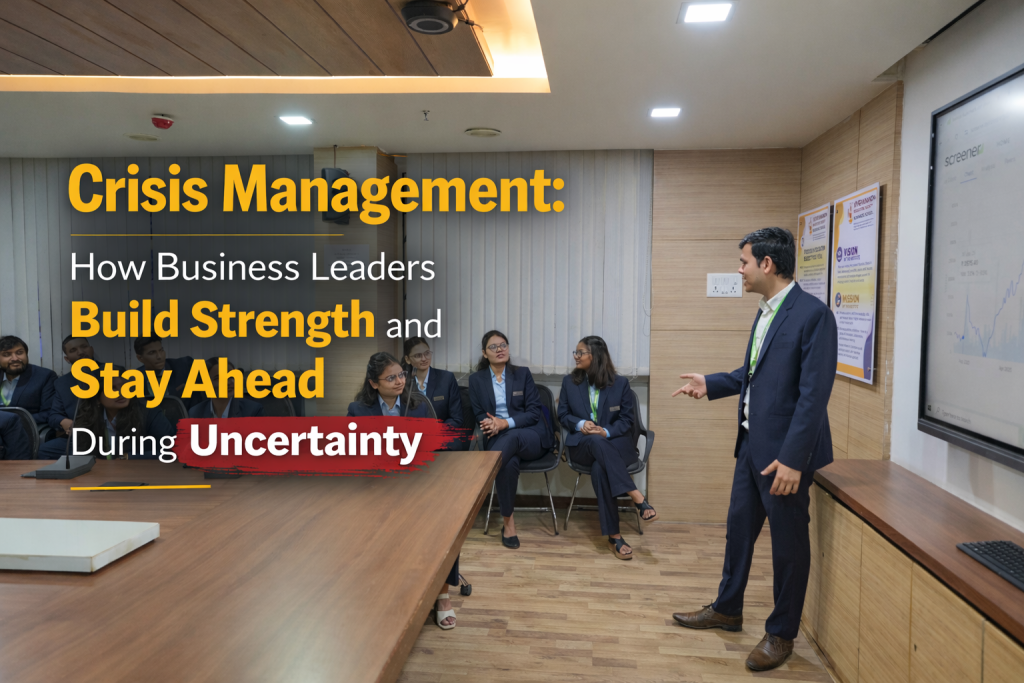
Unpredictable situations demand stronger leadership. Markets shift. Customer demand changes. Regulations evolve. Economic cycles tighten. Every year, over 60 percent of businesses face at least one major disruption. Many struggle because they lack structured crisis management in business.
Strong leaders perform in good times and challenging times. Both demand clarity. Both demand preparedness. Strong leaders do not wait for crisis. You prepare before disruption begins.
You create stability when you plan ahead and act with consistency.
Why Crisis Management in Business Is Now a Core Leadership Skill
Crisis has become a frequent part of business life. It often begins with supply issues and sudden market swings. A study by PwC reports that 95 percent of business leaders expect future disruptions to be more complex than previous ones.
Growth in the past does not secure the future. Structured action does.
Effective crisis management in business protects:
- Revenue streams
- Employee morale
- Brand trust
- Investor confidence
- Long term competitiveness
During disruption, your words matter. Your guidance keeps the team aligned.
Building a Strong Foundation Through Business Continuity Planning
Many leaders ask, What is business continuity planning? It is a structured approach that ensures your organization continues operations during disruption. It defines processes, backup systems, and recovery timelines.
Strong business continuity planning answers three key questions:
- Which functions keep your business running
- What threats could disrupt them
- How quickly can you bring them back
Data shows that companies with structured continuity plans recover faster than those without one.
You protect operations when you:
- Recognize your most essential operations.
- Develop secondary supplier partnerships.
Secure your data with backup systems. - Go through crisis situations in advance to improve coordination.
This foundation supports long term business survival strategies.
Designing Effective Crisis Management Strategies
You do not respond emotionally during a crisis. You respond strategically. Clear crisis management strategies reduce confusion and prevent financial loss.
Your strategy must include:
- Defined leadership roles
- Rapid decision frameworks
- Clear escalation protocols
- Real time performance monitoring
Companies that practice crisis scenarios often recover much faster. Many cut downtime significantly.
Preparation creates stability. Your team handles pressure with confidence and clarity.
A clear business crisis management plan brings unity during pressure. Leaders decide faster, operations stay coordinated, and communication remains consistent.
Aligning Risk Management Strategies in Business With Long Term Goals
Every crisis begins as a risk. You reduce impact when you identify risks early. Structured risk management strategies in business allow you to assess probability and impact before disruption occurs.
Your business stands firm when you:
- Map strategic and operational risks
- Track financial exposure
- Strengthen compliance processes
- Use predictive data insights
Structured risk mapping helps leaders make more informed and confident decisions.
Risk will always exist, but strong oversight keeps it under control.
The Power of Crisis Communication Strategies
A lack of communication weakens confidence. People want clear updates when things feel unstable.
Clear crisis communication strategies keep your message consistent across teams, customers, and partners.
Effective communication includes:
- Share timely and transparent updates.
- Outline clear and practical next steps.
- Assign one trusted voice to speak on behalf of the organization.
- Acknowledge the challenges honestly and directly.
Research shows that brands that communicate proactively during crisis retain more customer loyalty.
You build trust when you speak with clarity and responsibility.
Turning Disruption Into Opportunity
When a crisis arrives, the market shifts quickly. Some firms shrink under pressure, while others use the moment to grow. The difference lies in how ready they were.
You focus on turning crisis into opportunity by:
- Identifying emerging customer needs
- Launching agile products
- Optimizing cost structures
- Investing in digital transformation
You remain flexible through an agile business strategy that allows quick adaptation without losing long term direction.
How PGDM Education Prepares You for Crisis Leadership
Structured management education prepares you to handle uncertainty with confidence. Vivekanand Business School strengthens this ability through its transformation Pathway learning model.
The 15 month academic model followed by a 9 month paid internship bridges theory and execution. You gain hands-on exposure to real business situations during your course.
You benefit from:
- 95 percent PhD qualified faculty with 15 plus years of experience
- Industry focused curriculum
- Global Immersion exposure
- Value added certifications aligned with industry standards
- Strong industry connect through Mumbai’s business landscape
Recognition through NBA accreditation and AIU Master equivalence reinforces academic credibility for PGDM courses.
National rankings by GHRDC, Outlook iCare, and Times B School surveys reflect institutional trust .
You graduate not only with knowledge but with structured decision making capability.
Why CEOs and Senior Leaders Invest in Structured Management Learning
CEOs and senior leaders deal with complex and interconnected challenges every day. Structured PGDM learning sharpens:
- Strategic foresight
- Financial discipline
- Cross functional collaboration
- Analytical thinking
- Ethical governance
Senior leaders often acknowledge that structured management education sharpens decision making under pressure.
You gain frameworks that support sustainable growth.
Prepare to Lead Through Uncertainty
You cannot predict every crisis. You can prepare for it. Strong crisis management in business protects growth and builds lasting stability.
You lead confidently when you combine structured planning, disciplined risk oversight, clear communication, and adaptive strategy.
Vivekanand Business School empowers you to build this capability through its industry aligned PGDM program.
If you want to strengthen your leadership and prepare for uncertainty, explore the PGDM program at Vivekanand Business School Mumbai.
Step forward with confidence. Apply now and build the leadership strength today’s business world demands.
Author Bio:
Ms. Hetaal Palan is the Assistant Director – Branding, Marketing & Student Relations and Head – Alumni Relations at Vivekanand Business School (VBS), Mumbai. She leads strategic initiatives across institutional branding, student engagement, and alumni relations, playing a key role in strengthening VBS’s academic visibility and industry relevance. Her work focuses on aligning management education with evolving business, technology, and career trends.
LinkedIn: https://www.linkedin.com/in/hetaal-palan-00461737