
5173Views 0Comments
Harnessing Data for Marketing Success: How Business Analytics in Marketing Is Revolutionizing Consumer Insights
Marketing has evolved. You no longer depend only on creativity. You depend on clarity. Marketing decisions now depend heavily on clear and reliable data. Reports show that over 70 percent of marketing leaders invest in analytics to stay competitive. You need clear insights to make smarter marketing decisions.
This change is driven by business analytics in marketing. You use data to understand consumers deeply and act with precision.
The Role of Data Analytics in Segmenting Markets
You cannot market effectively without clear segmentation. Every customer group behaves differently. You need analytical tools to divide large audiences into meaningful clusters.
Through customer behavior analysis, you study purchase frequency, browsing habits, and response patterns. You identify high-value customers. You recognize price-conscious buyers and track shifts in market trends early.
When you apply big data in marketing analytics, you integrate information from websites, social media, CRM systems, and offline channels. This approach improves targeting accuracy and reduces wasted budget. Companies that rely on analytics-based segmentation improve campaign performance significantly.
You also strengthen decisions using business intelligence for marketing. Dashboards combine multiple data sources into one visual framework. You track segment performance and adjust campaigns quickly.
The Business Analytics curriculum helps you build strong skills in statistics, data management, SQL, and Python. You learn how to work with complex data and turn it into meaningful business insights.
You shift from broad campaigns to focused and meaningful customer engagement.
Personalizing Marketing Campaigns Using Analytics
Customers expect relevance. Generic campaigns often fail. You need personalization backed by evidence.
You apply marketing analytics to evaluate customer interactions and purchasing behaviour. This helps you design campaigns aligned with real needs. Personalized campaigns improve engagement compared to generic messaging.
Clear marketing analytics benefits include:
- Higher conversion rates
- Improved retention
- Lower acquisition cost
- Better campaign efficiency
You enhance personalization further through AI in marketing analytics. Artificial intelligence automates segmentation and recommends content based on behavioral patterns. Industry research by McKinsey and BCG shows that companies embedding AI into marketing often see measurable revenue growth and stronger customer engagement.
You also apply predictive analytics in marketing to forecast future actions. You start seeing who might leave, who is likely to buy again, and how to target them more effectively. Popular predictive analytics use cases include identifying high-quality leads, forecasting demand trends, and recommending relevant products.
The curriculum integrates predictive models and machine learning applications . You gain hands-on exposure to real datasets and real-world scenarios. This ensures you connect theory with application.
You shift from simply responding to customers to anticipating their needs.
Also Read : What to expect after a PGDM in Business Analytics
Real-World Examples of Data-Driven Marketing Success
You see analytics driving success across industries. Retail brands suggest products based on what customers browse and buy, which often increases the total value of each order. Streaming platforms analyze viewing history and recommend content that matches individual preferences. Financial institutions identify cross-sell opportunities through transaction analysis.
These examples show measurable outcomes:
- Revenue growth through predictive recommendations
- Higher email engagement through data targeting
- Improvement in advertising ROI
You measure impact using marketing ROI analytics. You compare campaign cost with revenue generated. This ensures accountability and smarter budget allocation.
Clear performance tracking depends on modern marketing dashboard tools. Dashboards present data visually and simplify interpretation.
Modern consumer insight tools combine buying patterns, transaction data, and customer feedback to give you a complete view. You also rely on predictive analytics tools for marketing to automate forecasting and segmentation tasks.
A recognized marketing analytics certification adds credibility to your skills.
You do not rely on assumptions. You rely on structured evidence.
How Vivekanand Business School’s Programs Blend Marketing and Analytics for a Data-Driven Approach
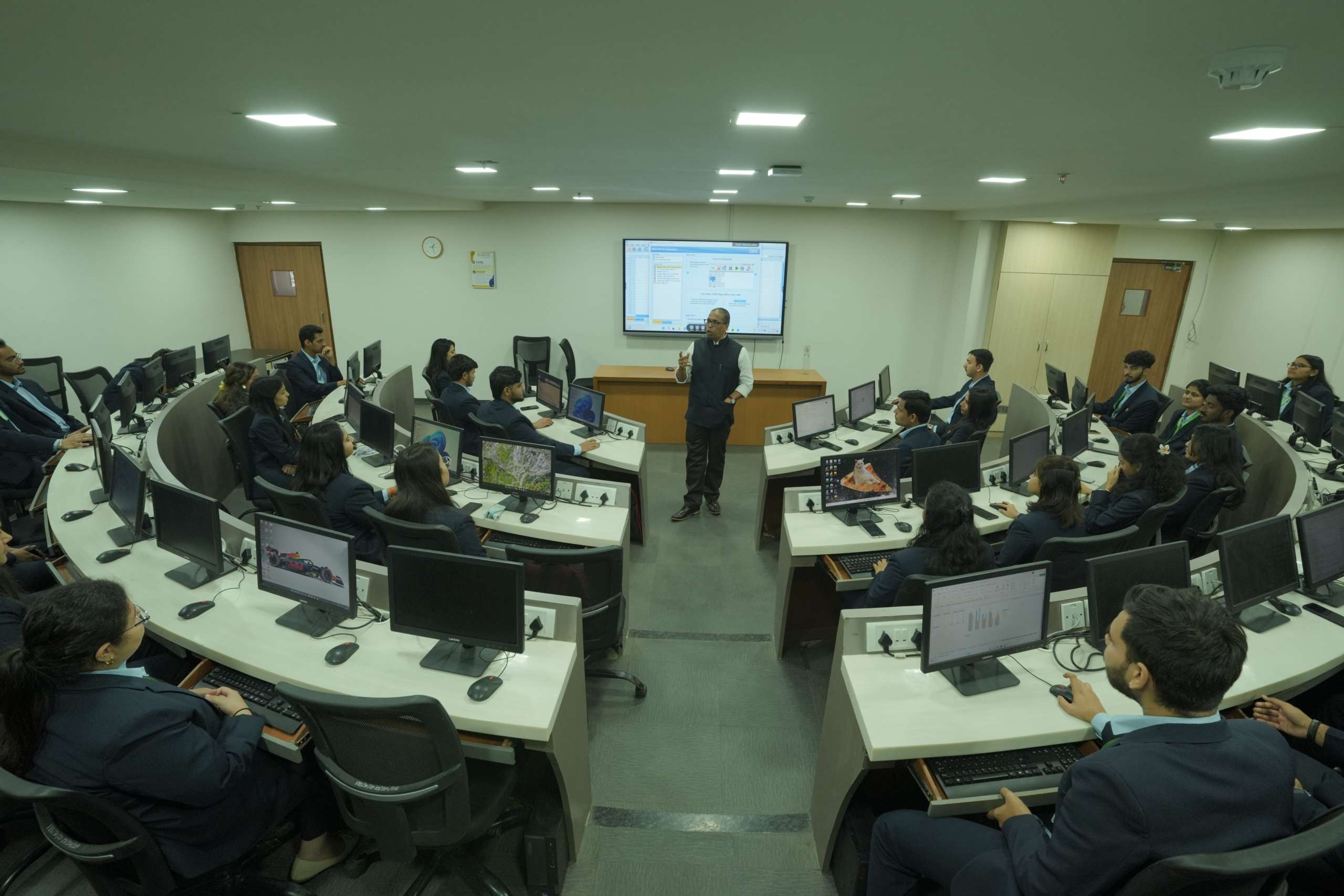
You need integrated education to master analytics-driven marketing. Vivekanand Business School in Mumbai combines core management learning with practical analytics training.
The first 15 months focus on classroom learning that builds strong foundations in management and analytics . You study business statistics, data visualization, machine learning, and marketing-focused analytical applications.
The 9-month industry internship strengthens real-world exposure . You apply analytical frameworks to live business problems. You gain practical industry exposure that prepares you for professional roles.
A structured PGDM in business analytics specialization equips you to:
- Segment markets using structured analytical models
- Personalize campaigns with predictive insights
- Apply AI-driven marketing strategies
- Measure performance through data-backed evaluation
- Translate insights into business growth
The curriculum emphasizes experiential learning, industry workshops, and lab-based training . You work with real datasets and modern analytical tools. You develop both technical depth and managerial understanding.
Conclusion
Marketing success today depends on how well you understand your data. Business analytics in marketing empowers you to understand consumers deeply and act strategically.
You connect with the right audience, personalize your message, and track meaningful results.
If you aim to lead in this data-driven era, explore the specialized programs at Vivekanand Business School (VBS). Review the curriculum. Understand the internship structure. Evaluate placement outcomes.
Take the next step toward becoming a marketing leader who makes decisions based on insight and evidence.
Author Bio:
Ms. Hetaal Palan is the Assistant Director – Branding, Marketing & Student Relations and Head – Alumni Relations at Vivekanand Business School (VBS), Mumbai. She leads strategic initiatives across institutional branding, student engagement, and alumni relations, playing a key role in strengthening VBS’s academic visibility and industry relevance. Her work focuses on aligning management education with evolving business, technology, and career trends.
LinkedIn: https://www.linkedin.com/in/hetaal-palan-00461737
